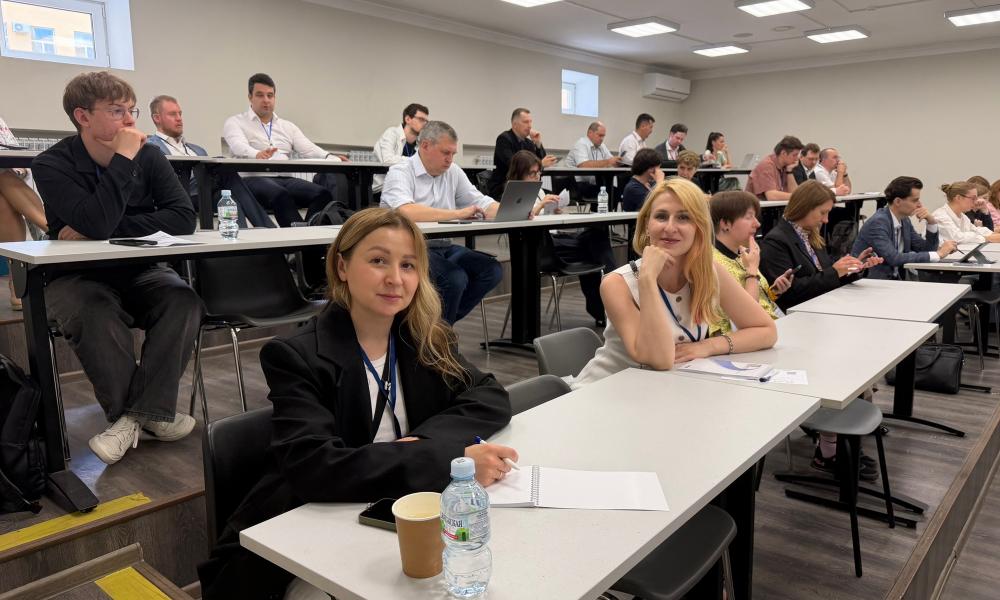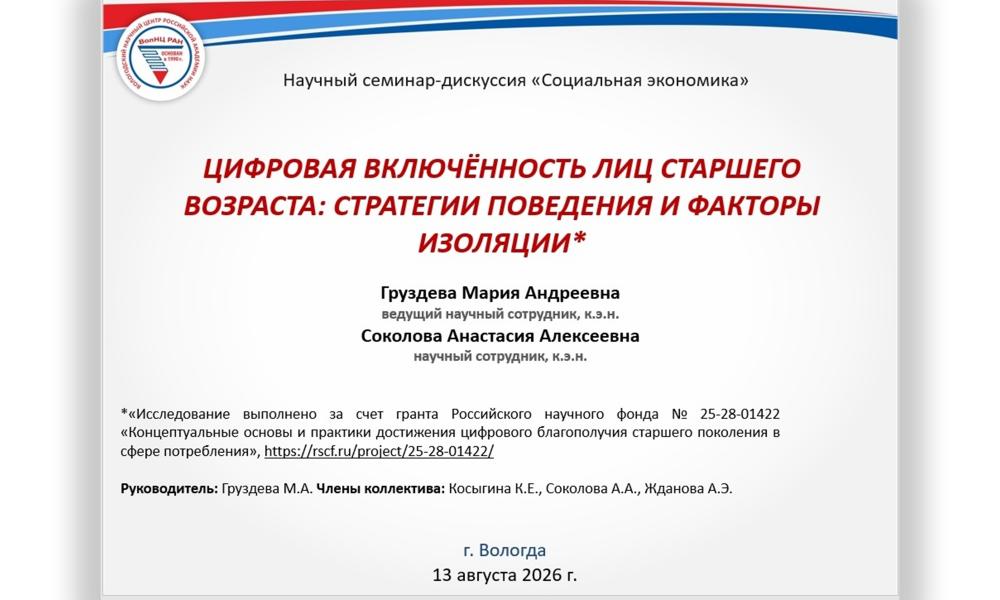
The speaker noted that there is a structural contradiction between the institutional imperative of large-scale digitalization and the lack of models of adaptation of the older generation to this new environment. At the same time, in the context of irreversible global demographic aging, the digital environment ceases to be a neutral tool for a prosperous life and turns into a filter of social exclusion. This actualizes the analysis of the factors of digital inclusion and isolation of older people.
The report analyzed research on behavioral strategies and digital inclusion of older people conducted in Russia and abroad. The use of such factors as the availability of technical skills and access to the Internet, the degree of inclusion in the digital environment, the ability to use online resources to meet social, cultural and everyday needs, as well as a subjective sense of belonging to the modern information society is justified for the analysis. This approach allowed for a deeper analysis of not only behavioral strategies, but also the determinants that promote or hinder the full integration of older generations into the digital space.
The empirical basis of the study was the data from the representative sociological survey "Digital well-being of the elderly" conducted in the Vologda Oblast in 2025 among people over 50 years of age. A two-stage cluster analysis and the CHAID decision tree method were used for the analysis. The result was the identification of three groups that reflect the differentiation of this age group in terms of the level of digital skills, the frequency of Internet use and attitude to digital technologies.: positive optimists, interested amateurs, and indifferent conservatives. At the second stage, the factors of inclusion and isolation were identified, the most significant of which were age within the group, marital status, employment and place of residence.
The reviewers (Senior researcher, Candidate of Economics E.D. Kopytova and Senior Researcher, Candidate of Economics M.V. Morev) and the expert (head of the Laboratory of Intelligent and Software Information Systems V.A. Rigin) noted the relevance of the work, scientific novelty and made a number of recommendations for further development of the research and improvement of the methodology.